How 2025 Became the Year Sweepstakes Casinos Died in America
For nearly a decade, sweepstakes casinos occupied a peculiar space in the American gambling landscape. Platforms like Chumba Casino, High 5 Casino, and Stake.us offered slot-style games and poker rooms to players in states where traditional online gambling remained illegal. Their secret? A dual-currency system that their lawyers argued wasn't gambling at all.

That argument is now dead.
2025 will be remembered as the year regulators, tribal nations, and commercial gaming giants united to systematically dismantle the sweepstakes casino industry. The campaign has been swift, coordinated, and devastatingly effective.
The Loophole That Built an Empire
To understand the fall, you need to understand how sweepstakes casinos worked in the first place.
The model was elegant in its legal creativity. Players purchased Gold Coins - a virtual currency with no cash value - to play casino-style games for entertainment. But here's the twist: every Gold Coin purchase came bundled with "free" Sweeps Coins, which could be redeemed for real cash prizes.

The operators' legal position was simple: since Sweeps Coins were technically free (you could even request them by mail), no "consideration" - a required element of gambling - was present. They compared themselves to McDonald's Monopoly promotions, not casinos.
By early 2025, this interpretation had built a multi-billion dollar industry. An estimated 98% of global sweepstakes gaming revenue came from the United States alone. In California, the sector generated roughly $1 billion annually, with operators spending over $100 million on advertising to acquire players.
California Drops the Hammer
The killing blow came from Sacramento.
On October 11, 2025, Governor Gavin Newsom signed Assembly Bill 831 into law. Unlike previous regulatory attempts that relied on stretching existing gambling statutes, AB 831 was purpose-built to destroy the sweepstakes model.
The bill specifically targets any online platform that:
Uses a dual-currency system
Simulates casino-style games (slots, poker, blackjack, sports betting)
Awards cash or cash equivalents as prizes
There's no wiggle room. The "no purchase necessary" defense that operators relied on for years is explicitly neutralized.
The penalties are severe: fines up to $25,000 per violation, plus potential jail time. But the truly alarming provision for the broader industry is the expansion of criminal liability beyond operators themselves. The law explicitly names payment processors, software suppliers, geolocation providers, and - critically - media affiliates as potential criminal defendants.
After January 1, 2026, promoting a sweepstakes casino to California residents isn't just legally risky. It's a crime.
The bill passed with stunning unanimity: 79-0 in the Assembly, 36-0 in the Senate. The sweepstakes industry had no friends left in Sacramento.
Strange Bedfellows: The Alliance That Changed Everything
How did a bipartisan, unanimous coalition form against an industry that had operated largely unopposed for years?
The answer lies in an unlikely alliance between two historic rivals: tribal gaming nations and commercial sports betting operators.

California's tribal nations, represented by the California Nations Indian Gaming Association (CNIGA), viewed sweepstakes casinos as a direct threat to their constitutional gaming exclusivity. Under Proposition 1A (2000), tribes hold exclusive rights to operate slot machines and banking card games in California. From their perspective, sweepstakes operators were running illegal casinos that violated this compact.
Meanwhile, DraftKings, FanDuel, BetMGM, and Fanatics - united under the Sports Betting Alliance (SBA) - saw billions in potential revenue leaking to unregulated competitors who paid no taxes and held no licenses.
These groups had spent $400 million battling each other over Propositions 26 and 27 in 2022. Now they found common cause.
SBA President Jeremy Kudon memorably described sweepstakes sites as "speakeasies" - storefronts that look like harmless social games but operate as illegal casinos in the back. The commercial operators brought data, lobbying funds, and national political connections. The tribes brought moral authority, local political dominance, and constitutional arguments.
Together, they were unstoppable.
The Great Exodus
With California's ban approaching, operators didn't fight. They fled.
Virtual Gaming Worlds (VGW), the Australian giant behind Chumba Casino, Global Poker, and LuckyLand Slots, began a systematic retreat across North America. In a surprise move, VGW completely exited Canada by October 2025. In the US, they've now withdrawn from at least 12 states, including California, Connecticut, New Jersey, Michigan, Louisiana, and West Virginia.
High 5 Games faced a double threat: AB 831 and an ongoing class-action lawsuit in California. When a San Francisco judge denied their motion to dismiss and ruled their arbitration clause "unconscionable," the writing was on the wall. High 5 exited California in September 2025, months before the law took effect.
Stake.us was specifically targeted by the Los Angeles City Attorney in late 2024. The lawsuit named not just Stake, but their game suppliers - including Pragmatic Play and Evolution - as co-conspirators. Major game providers immediately pulled their content from the platform. Stripped of its best games and facing a city with unlimited legal resources, Stake.us announced it would shut down California operations on December 30, 2025.
The Domino Effect: State-by-State Crackdown
California wasn't alone. A wave of state-level action swept across America throughout 2025.
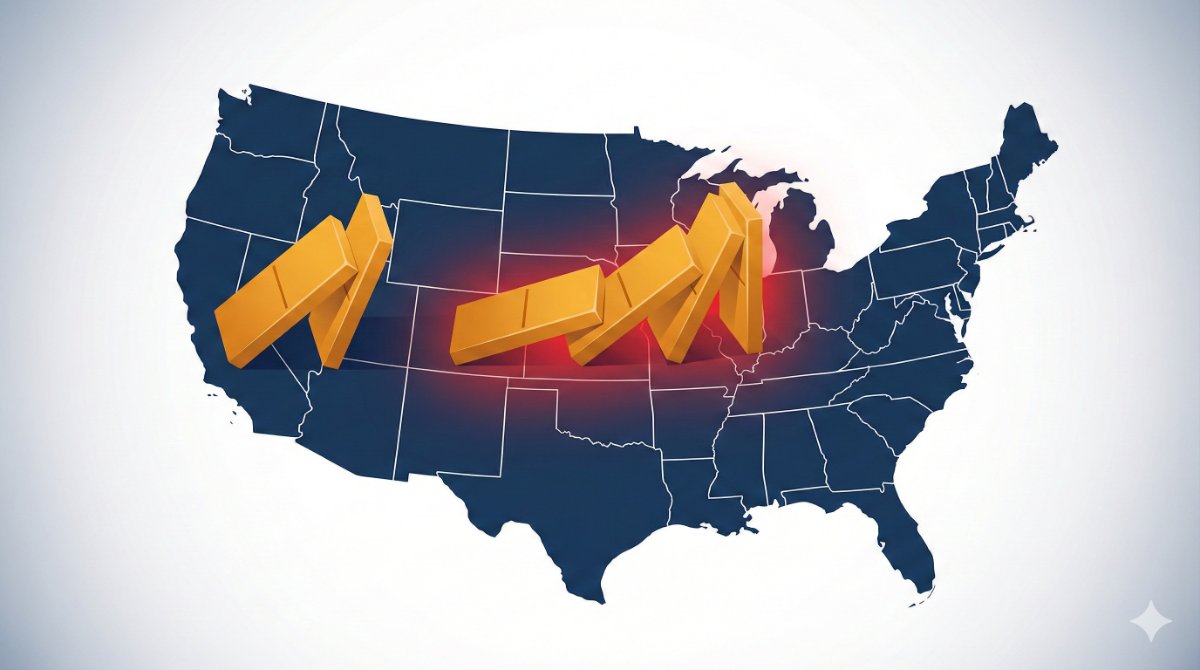
Connecticut raised the stakes highest, classifying sweepstakes casino operation as a Class D Felony. No executive was willing to risk a felony record for Connecticut market share.
New Jersey, the pioneer of legal US iGaming, passed its own ban in August 2025 with civil penalties up to $250,000 for repeat offenders.
Michigan pioneered "supply chain strangulation," threatening to revoke licenses from any vendor doing business with sweepstakes sites. The Gaming Control Board has issued cease-and-desist orders to dozens of operators.
Louisiana presented a chaotic picture: the legislature passed a ban, Governor Jeff Landry vetoed it, then Attorney General Liz Murrill issued an opinion declaring sweepstakes casinos illegal anyway. VGW exited rather than navigate the legal minefield.
Montana and Nevada passed criminal statutes. Pennsylvania and Ohio have regulatory pressure building, with bans expected by late 2026.
What This Means for Players
If you've been playing at sweepstakes casinos, the immediate implications depend on where you live.
If you're in California, Connecticut, New Jersey, Michigan, Montana, or Nevada: These platforms are already blocked or will be by January 2026. Any remaining balance should be withdrawn immediately.
If you're in other states: Operations continue for now, but the trend is unmistakable. More states will follow California's template. The "gray market" window is closing.
For all players: The lack of regulatory oversight that allowed sweepstakes casinos to exist also meant fewer consumer protections. The shift toward regulated markets - while limiting options - brings stronger player protections, responsible gambling tools, and guaranteed payouts.
The Future of Online Gaming in America
The sweepstakes era taught the gambling industry an important lesson: regulatory arbitrage has an expiration date.
For the commercial operators and tribal nations who orchestrated this crackdown, the victory serves multiple purposes. It eliminates unregulated competition. It funnels demand back toward licensed platforms. And it establishes a precedent for future state-by-state expansion of legal iGaming.
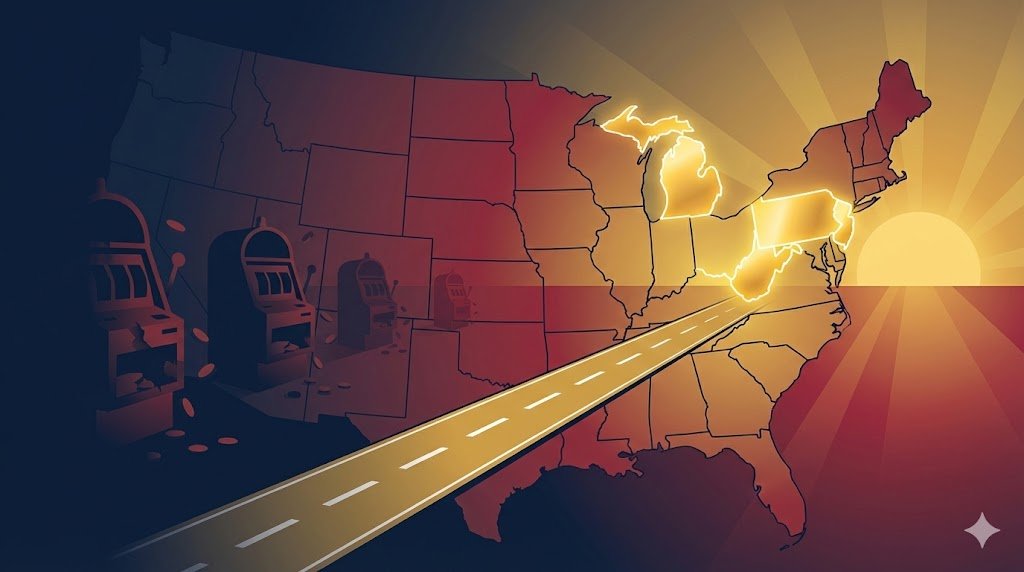
The alliance forged in 2025 between tribes and commercial operators - former bitter rivals - may prove to be the most significant long-term development. Having proven they can collaborate to protect market integrity, they may now work together to open new regulated markets in Texas, Georgia, and beyond.
For players who enjoyed the accessibility of sweepstakes platforms, the path forward runs through regulated iGaming. States like New Jersey, Pennsylvania, Michigan, and West Virginia already offer legal online casinos. Check our casino reviews to find reputable platforms available in your state. More will follow - and increasingly, the choice won't be between "gray market" and nothing, but between legal, licensed options and the black market.
The dual-currency model that built a billion-dollar industry is dead. The era of regulatory clarity - for better or worse - has begun.