India Bans Online Gaming: The $3 Billion Industry Shutdown Nobody Saw Coming
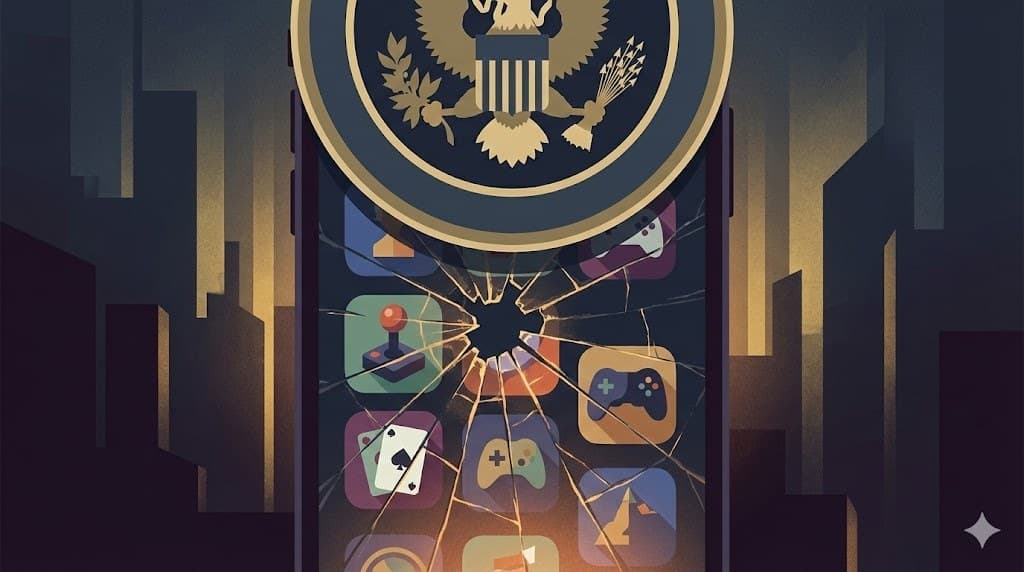
On August 21, 2025, India's Parliament passed the Promotion and Regulation of Online Gaming Act in less than 48 hours. By August 22, President Droupadi Murmu had signed it into law. Within a week, Dream11 – valued at $8 billion – had lost 95% of its revenue. Flutter Entertainment took a $556 million writedown. And roughly 200,000 jobs were suddenly at risk.
The world's fastest-growing online gaming market didn't die slowly. It was killed in a single legislative session.
What The Law Actually Does
The Promotion and Regulation of Online Gaming Act, 2025 bans all "online money games" – regardless of whether they're skill-based or chance-based. Fantasy sports, poker, rummy, and even competitive carrom now carry the same legal status as slot machines and casino games.
The penalties are severe. Operating or facilitating real-money gaming can result in up to three years in prison and fines of ₹1 crore (approximately $120,000). Advertising such games carries up to two years imprisonment and ₹50 lakh in fines. Repeat offenders face up to five years behind bars.
Banks and payment processors are prohibited from facilitating transactions. Internet service providers must block non-compliant platforms. The law essentially cuts off every artery that kept India's gaming ecosystem alive.
The Government's Justification
Union Minister for Electronics and IT Ashwini Vaishnaw presented stark figures to Parliament: 45 crore Indians – roughly 450 million people – have been negatively affected by online money games, collectively losing over ₹20,000 crore annually.
The government cited addiction, financial ruin, and even suicides linked to gaming losses. Tamil Nadu alone reported 47 deaths connected to online gaming addiction between 2019 and 2024. Stories of young people drowning in debt, families destroyed, and savings wiped out were central to the legislative push.
"The aim is to protect families from financial ruin and addiction," a government official stated. From the Centre's perspective, this wasn't an economic decision – it was a public health intervention.
The Industry's Response
The gaming industry's reaction was immediate and desperate.
Dream11, India's largest fantasy sports platform with over 200 million users, suspended all paid contests within hours of the law's passage. CEO Harsh Jain called the decision "a shock" while acknowledging the industry had failed to self-regulate effectively. Despite losing 95% of revenue overnight, Dream11 announced no layoffs and instead pledged to redirect 500 engineers toward AI and new product development in what Jain dubbed "Dream11 3.0."
Mobile Premier League (MPL) wasn't as fortunate. The company announced it would lay off 60% of its India workforce – roughly 300 employees. CEO Sai Srinivas was blunt in his email to staff: the company would generate "zero revenue from India in the future."

Flutter Entertainment, the Irish gambling giant behind FanDuel and PokerStars, moved fastest. Within days of the ban, Flutter shuttered its Junglee Games subsidiary, which it had acquired for $237 million over four years. The company took a $556 million impairment charge – more than twice its original investment due to accounting reallocations. Flutter CEO Peter Jackson called the sudden regulatory shift "extremely disappointing."
The cascade continued across the industry. PokerBaazi, A23 Rummy, Zupee, WinZO, My11Circle – each suspended real-money operations. Industry groups estimated total job losses could exceed 200,000 across more than 400 companies.
Cricket Sponsorship Chaos
The timing created an immediate crisis for Indian cricket. Dream11 held a ₹358 crore sponsorship deal as Team India's lead jersey sponsor through 2026. That contract became legally toxic overnight.

The BCCI terminated the agreement, and for the first time in years, Team India took the field at the Asia Cup 2025 wearing sponsor-less jerseys. It was a visible symbol of how thoroughly the ban had disrupted India's commercial sports ecosystem.
Apollo Tyres eventually filled the void, winning the sponsorship rights with a ₹579 crore bid for 2.5 years. But the damage extended beyond a single contract. Dream11 and similar platforms had contributed roughly ₹1,000 crore annually to Indian cricket through various sponsorships. Celebrity endorsers including Virat Kohli, Rohit Sharma, and MS Dhoni collectively lost endorsement contracts worth over ₹200 crore.
The Constitutional Fight
The gaming industry didn't accept its fate quietly. Constitutional challenges were filed in Karnataka, Madhya Pradesh, and Delhi High Courts within weeks of the law's passage.
The core argument: India's courts have recognized games like rummy, poker, and fantasy sports as skill-based activities for over 70 years. The Supreme Court's 1957 Chamarbaugwala ruling established that skill games are protected under Article 19(1)(g) – the constitutional guarantee to practice any profession or carry on lawful trade.
By lumping all money games together regardless of skill or chance, the industry argues, the government has overturned decades of established precedent.
There's also a federalism question. Betting and gambling traditionally fall under state jurisdiction in India's constitutional framework. Critics argue the Centre used a questionable interpretation of its cross-border commerce powers to override state authority.
The Supreme Court consolidated all challenges in September 2025 and scheduled hearings for November. During preliminary proceedings on November 4, Justice K.V. Viswanathan made remarks that gave the industry hope: tournaments focused on skill rather than betting might be "completely excluded" from the law's scope.

The government was directed to file a comprehensive response by November 26, 2025. Karnataka has indicated it may challenge the law on federal overreach grounds, potentially widening the constitutional battle.
The Offshore Migration Problem
Here's the central irony the government may not have anticipated: banning legitimate platforms doesn't eliminate demand – it redirects it.
Fantasy sports analyst Viren Hemrajani put it simply: "Many will move to offshore platforms because of the addictive nature – they will find alternate means to get that dopamine hit."
Industry estimates suggest unregulated offshore gambling platforms already handle ₹8.2 lakh crore annually in India. These operators pay no taxes, offer no consumer protections, and face no accountability when players lose money. Evidence from previous state-level bans in Tamil Nadu and Karnataka suggests prohibitions rarely eliminate demand – they simply push it underground.
The government acknowledges this risk. The law includes provisions for blocking offshore operators and extraterritorial enforcement. Whether these measures will prove effective remains unclear.
What Happens Next
The immediate future depends heavily on the Supreme Court's ruling. Three scenarios are possible.
If the court upholds the ban entirely, India's real-money gaming industry effectively ceases to exist domestically. Companies will continue pivoting to free-to-play models, esports, and international expansion. Some may survive through advertising revenue and non-monetary competitions. Most will scale down dramatically or shut down.
If the court strikes down the law on constitutional grounds, the industry could revive – though likely under stricter regulation than before. The government would probably respond with modified legislation that attempts to address the court's concerns while maintaining some restrictions.
The most likely outcome may be a middle ground: the court could carve out exceptions for clearly skill-based competitions while allowing restrictions on chance-based games. This would preserve esports and competitive gaming while potentially leaving fantasy sports in a legal gray zone.
For international operators watching from the sidelines, the lesson is clear: India's gaming market isn't closed, but it's being fundamentally redefined. Companies that understand this transition phase – and position themselves accordingly – may find opportunities in whatever emerges from the current chaos.
For Indian players, the immediate reality is simpler. The apps they used are gone. The games they played for money are now illegal. And the offshore alternatives that remain offer none of the protections they once took for granted.
The world's largest democracy has made its choice. Whether that choice protects citizens or simply pushes them toward greater risk remains to be seen.