South Africa's R75 Billion Gambling Industry Has a R50 Billion Problem

South Africa's legal gambling market hit R75 billion ($4.3 billion) in revenue this year. But here's the uncomfortable truth regulators don't want to discuss: an estimated 62% of online gambling activity happens on illegal offshore platforms. That's roughly R50 billion flowing to operators in Curaçao while licensed bookmakers watch their market share erode.
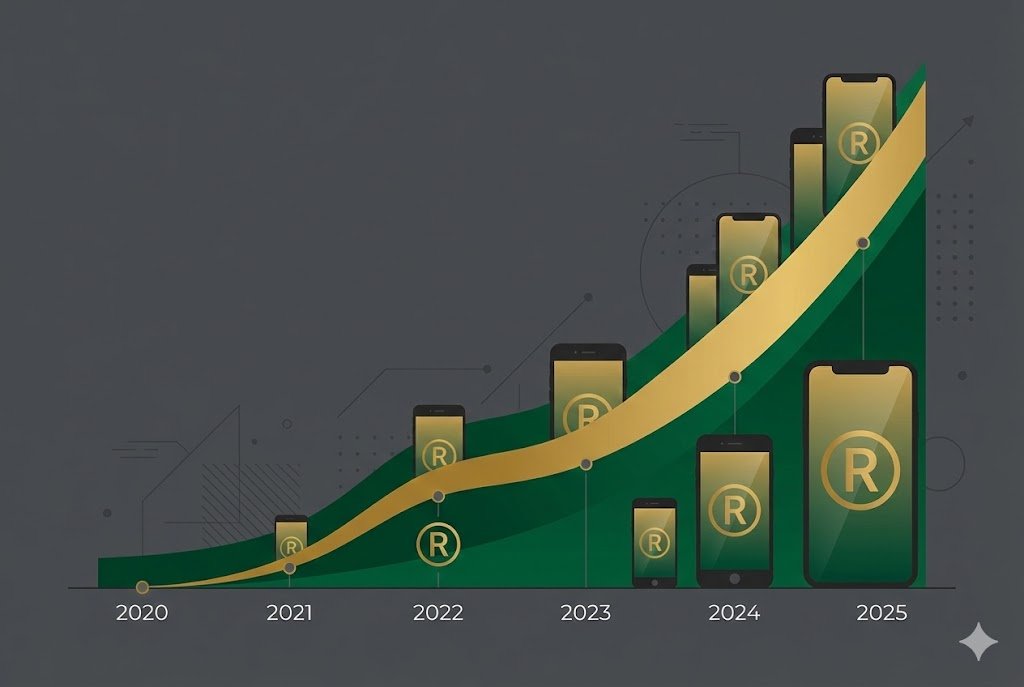
The numbers paint a picture of a market that's grown faster than anyone can control. Total gambling turnover reached R1.5 trillion in FY2024-25 - up 84% from just two years ago. Sports betting now captures 70% of all gambling revenue, with 80% of those bets placed through mobile apps. The transformation has been seismic, and South African regulators are still working with a 2004 playbook.
Now 107 organizations have formed a coalition demanding a complete ban on online gambling. The industry is fighting a proposed 20% national tax. And somewhere in between, 16 million South Africans continue betting on platforms that operate outside any regulatory framework.
How South Africa Built a R75 Billion Industry on Fragmented Rules
The legal structure governing South African gambling was designed for a different era. The National Gambling Act of 2004 created a constitutional oddity: gambling is regulated by both national and provincial governments, meaning nine separate provincial boards issue licenses while the National Gambling Board provides oversight.
This matters because of one critical distinction. Online sports betting through licensed bookmakers? Legal. Online casino games like slots and roulette? Prohibited under Section 11's ban on "interactive gambling." A 2008 amendment was supposed to fix this gap, but the President never signed the commencement order. Sixteen years later, South Africa still lacks a coherent framework for online gambling.
Only three provinces - Western Cape, Mpumalanga, and Eastern Cape - currently issue new bookmaker licenses on demand. Operators wanting licenses elsewhere must acquire them through business transfers. Western Cape uniquely permits "casino-style contingency games" under bookmaker licenses, though an October 2025 Supreme Court ruling prohibited bookmakers nationally from offering fixed-odds roulette.
The result? A patchwork system where what's legal depends on which province licensed your operator and what type of game you're playing.
The 62% Problem: How Offshore Operators Captured the Market
The claim that 62% of South Africa's online gambling flows to illegal operators deserves scrutiny. The figure comes from Yield Sec's 2023/24 report, commissioned by the South African Bookmakers' Association - an industry group with obvious interest in emphasizing illegal competition.
That said, the scale of offshore activity is substantial by any measure. Yield Sec identified 2,084 unlicensed gambling websites targeting South Africans, supported by 1,134 affiliate sites. An estimated 16 million South Africans - 27% of the population - used illegal platforms last year.
The biggest names? 1xBet and Stake.com, both licensed in Curaçao. These operators offer anonymous casino experiences with minimal verification, crypto payment options that bypass traditional banking, and aggressive marketing through social media and influencers.
Enforcement has been virtually non-existent. Over five years, only 36 cases reached police, resulting in 39 arrests and 22 convictions - all in just two provinces. The NGB has two staff members tracking illegal websites, with a budget of R596,000 (about $33,000) for 2025/26. When the NGB asked Google to remove 10 identified illegal gambling sites, Google didn't comply with a single request.

South Africa doesn't block gambling websites. Payment processors continue serving offshore operators through bank transfers, credit cards via third parties, and "universal voucher" systems. One investigation found that 37.5% of partners on a major voucher platform were gambling websites.
The lost tax revenue? SABA estimates R3.5 billion annually - money that currently flows to offshore operators who contribute nothing to South African society.
107 Organizations Want Online Gambling Banned. Here's Why It Won't Happen.
The Civil Society Coalition Against Online Gambling emerged from a November 2025 summit in Durban. Their "Civil Society Declaration on the Harm of Online Gambling" carries signatures from labor unions, religious bodies, child welfare organizations, and civic groups. COSATU's KZN secretary declared that "workers' hard-earned salaries, meant for basic amenities, vanish into digital gambling run by faceless corporations."
The coalition frames online gambling as a "silent epidemic" and "national emergency." Their statistics include claims that middle-income South Africans spend 38-50% of income on gambling - figures that likely reflect specific survey samples rather than population-wide data. More credible NGB research shows 65.7% gambling prevalence, with concerning patterns among vulnerable populations: 28% of households earning under R2,000 monthly participate in gambling.
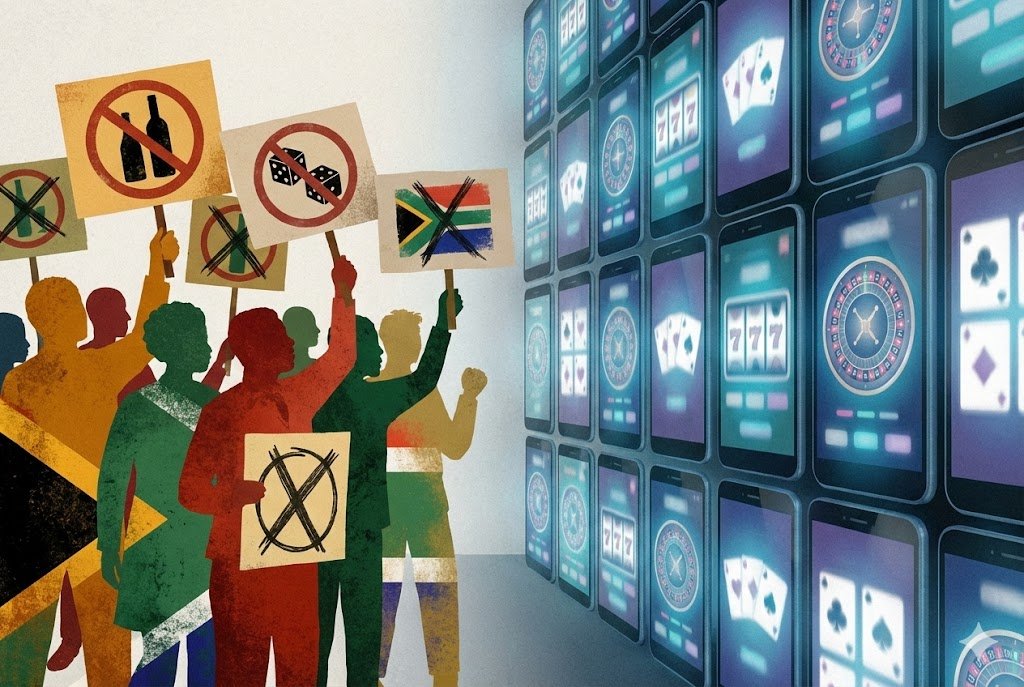
Political support for a ban remains limited. Jacob Zuma's uMkhonto weSizwe Party has expressed support, but Trade Minister Parks Tau explicitly stated his intention to "regulate online gambling," not ban it, emphasizing gambling's contribution to "revenue generation and job creation."
A complete ban is unlikely for four reasons. First, the economic stakes are too high - R1.5 trillion in turnover supports 144,000 jobs. Second, government orientation favors regulation over prohibition. Third, enforcement capacity barely exists. Fourth, gambling falls under provincial jurisdiction, creating constitutional complexity for national action.
The more achievable outcomes? Advertising restrictions and blocking welfare recipients from gambling platforms - measures the industry itself supports.
The 20% Tax That Could Make Everything Worse
National Treasury's November 2025 proposal for a 20% tax on online gambling has united an unlikely coalition: licensed operators and anti-gambling campaigners both think it's a bad idea, albeit for different reasons.
Industry groups call it "meatball economics." Sun International's CEO warned that high taxes "reduce revenue and push players offshore." Licensed operators already pay provincial taxes ranging from 6-15% of GGR. Adding a 20% national layer would push effective rates above 35% - creating a massive competitive disadvantage against offshore platforms paying nothing.
The tax would theoretically apply to both licensed and unlicensed operators. But operators already ignoring South African law won't suddenly start paying taxes. The practical effect? Licensed operators become less competitive while illegal platforms remain unaffected.
Public comment closes January 30, 2026. Constitutional challenges are considered likely, and the proposal may be significantly modified before implementation.
What Actually Needs to Happen
The Remote Gambling Bill (B11-2024), introduced by the Democratic Alliance, aims to finally create a licensing framework for online gambling. Industry experts estimate passage will take 1-2 years minimum, with extensive secondary regulations required afterward.
But legislative fixes alone won't solve the enforcement gap. South Africa needs:
Actual blocking capability. Most countries with effective online gambling regulation block unlicensed sites at the ISP level. South Africa doesn't.
Payment processing restrictions. Banks and payment processors need clearer obligations to refuse transactions with unlicensed operators.
Advertising enforcement. Offshore operators market aggressively through social media and influencers. Current rules technically prohibit this, but enforcement is nonexistent.
Real enforcement resources. Two NGB staff members with a R596,000 budget cannot monitor 2,084 illegal websites.
The industry's best argument isn't that regulation protects their profits. It's that prohibition has already failed. South Africans aren't choosing between legal and illegal gambling - they're gambling on illegal platforms because licensed operators can't offer comparable products under current restrictions.
The Stakes for Africa's Largest Gambling Market
South Africa commands approximately 40-50% of continental gambling revenue. Six African operators now rank in the global top 20 gambling websites by traffic. Hollywoodbets alone receives 35.7 million monthly visits, ranking eighth globally.
International operators continue investing despite regulatory uncertainty. SOFTSWISS acquired South African wagering provider Turfsport in early 2024. Super Group's Betway now derives 39% of global revenue from Africa and the Middle East, with South Africa described as "by far the most important" market.
Market projections suggest 10.8% compound annual growth through 2030, reaching $2.66 billion in online gambling revenue. But growth built on regulatory arbitrage isn't sustainable. Eventually, South Africa will either establish a functional licensing regime that captures offshore activity - or watch its legal industry wither while the shadow market thrives.
The coalition demanding a ban has one thing right: the current situation is untenable. They're just wrong about the solution. You can't prohibit something that 16 million people already do. You can only choose whether to regulate it or surrender to chaos.
South Africa hasn't made that choice yet. But with R50 billion flowing offshore annually, time isn't on anyone's side.