US Prediction Markets in 2025: The Complete Guide

DraftKings and FanDuel just quit the American Gaming Association and surrendered their Nevada casino licenses. Not because they're leaving gambling - because they're betting prediction markets will be bigger than sports betting ever was.
That's not hyperbole. Kalshi hit $4.39 billion in monthly trading volume in October 2025. Polymarket returned to the US market in November after a three-year exile. And traditional sportsbooks are scrambling to launch their own platforms before they get left behind.
If you've heard about prediction markets but aren't sure how they differ from regular betting - or why regulators are fighting over them - this guide breaks down everything you need to know.
What Are Prediction Markets, Exactly?
Prediction markets let you trade contracts on future events. Buy a "Yes" contract on "Will the Eagles win the Super Bowl?" at $0.35, and you're saying there's a 35% chance it happens. If they win, your contract pays $1.00. If they lose, it's worth nothing.
The price reflects collective probability. When new information emerges - an injury, a scandal, a policy shift - traders adjust their positions, and prices move accordingly. It's crowd-sourced forecasting with money on the line.
Here's the key difference from traditional sports betting: there's no house setting odds. You're trading against other users on an exchange. The platform takes a small fee, but there's no built-in margin working against you. And you can sell your position before the event resolves - something impossible with a standard sportsbook bet.
The Big Five Platforms
Kalshi: The Regulated Pioneer
Kalshi is the only US-based prediction market with full CFTC designation as a Designated Contract Market. That federal license is everything - it's why Kalshi can operate in all 50 states while traditional sportsbooks remain stuck in 39 jurisdictions.
Founded in 2018 by MIT graduates Tarek Mansour and Luana Lopes Lara, Kalshi spent years fighting the CFTC for the right to list election contracts. They won. A federal judge ruled in September 2024 that elections aren't "games" under the Commodity Exchange Act, and the appeals court refused to stay that decision. The CFTC dropped its appeal entirely in May 2025.
Current Kalshi numbers tell the story:
$4.39 billion monthly volume (October 2025)
62% global prediction market share
$11 billion valuation after December 2025 funding round
477,850 monthly active traders
Sports markets now drive 75% of Kalshi's volume. March Madness alone generated $513 million in 2025. The platform charges 1-3.5% fees depending on contract probability, requires users to be 18+, and has partnered with Robinhood to reach its 24.8 million customers.
Polymarket: The Crypto Giant Returns
Polymarket dominated the 2024 election cycle despite being technically blocked for US users. Over $3.3 billion was wagered on Trump vs. Harris, with Polymarket showing Trump at 58-60% while polls called it a toss-up. Polymarket was right.
The platform operates on the Polygon blockchain using USDC stablecoin. There's no central order book - you're trading peer-to-peer, with smart contracts handling settlement automatically. Fees are currently zero, though that's a growth strategy funded by venture capital rather than a permanent feature.
Polymarket's US return came through acquiring QCEX, a CFTC-licensed exchange, for $112 million. The platform launched US beta trading on November 12, 2025, immediately hitting #1 on the iOS Sports chart. Valuation sits around $9 billion following a $2 billion investment from the Intercontinental Exchange - the company that owns the New York Stock Exchange.
The advisory board reads like a who's who: former CFTC Chairman J. Christopher Giancarlo, FiveThirtyEight founder Nate Silver, and Donald Trump Jr. (who's also advising Kalshi, hedging his bets appropriately).
Fanatics: First Traditional Operator to Launch
Fanatics Markets went live December 3, 2025, making parent company Fanatics the first major sports betting operator to enter prediction markets. They're running through Crypto.com's CFTC-registered exchange, launching immediately in 24 states.
The strategic play is clever: Fanatics targeted states where its sportsbook doesn't operate, avoiding conflicts with state gaming regulators. CEO Matt King called it "the top of the first inning."
FanDuel: The CME Group Partnership
FanDuel Predicts launches December 2025 through a joint venture with CME Group - the world's largest derivatives marketplace. That partnership brings CME's century of futures trading expertise to sports and event contracts.
Parent company Flutter is investing $200-350 million in 2025-2026 for the rollout. Markets will cover NFL, NBA, MLB, and NHL alongside financial instruments like S&P 500 futures, Nasdaq-100, oil, gold, and crypto prices.
DraftKings: The Railbird Acquisition
DraftKings acquired Railbird Technologies in October 2025 for $48.6 million plus up to $200 million in earnouts. CEO Jason Robins called it "the most bullish I have ever felt about our future."
The logic is straightforward: half of Americans can't legally bet on sports. Prediction markets, operating under federal CFTC oversight, work everywhere. DraftKings expects to launch before the current NFL season ends.
Why States Are Fighting Back
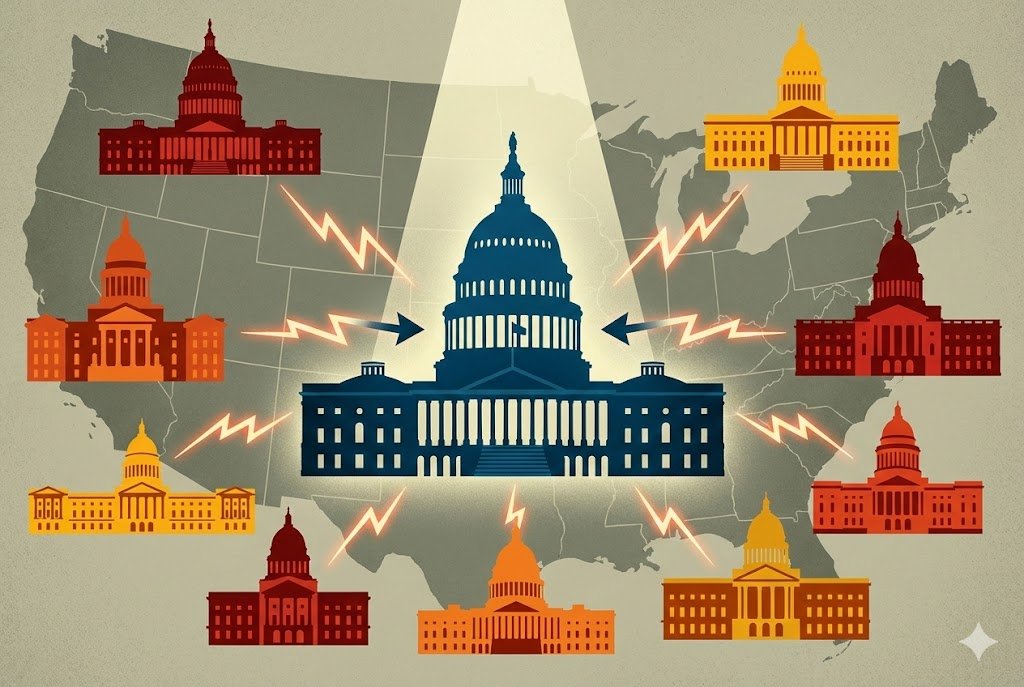
Nevada Gaming Control Board Chair Mike Dreitzer called prediction markets an "existential threat." He's not wrong - from Nevada's perspective.
Prediction markets bypass state gambling commissions entirely. Kalshi doesn't need a Nevada license. It doesn't pay Nevada gaming taxes. It doesn't follow Nevada responsible gaming requirements. And it can offer sports wagering to California and Texas residents who can't legally use DraftKings Sportsbook.
The state response has been aggressive:
34+ state attorneys general filed briefs supporting state regulatory authority
9 states issued cease-and-desist orders against Kalshi
Massachusetts AG filed a lawsuit alleging illegal sports betting
Michigan, Ohio, Illinois, Pennsylvania, and Arizona warned licensed sportsbooks against prediction market partnerships
Here's the problem for states: federal courts keep ruling that CFTC jurisdiction preempts state gambling laws. Kalshi has won preliminary injunctions in Nevada and New Jersey. The legal question isn't settled - appeals are pending - but prediction markets are currently winning.
That's exactly why DraftKings and FanDuel quit the AGA and surrendered Nevada licenses. They're betting federal preemption holds. Losing Nevada hurts. Accessing California and Texas without state approval? That's worth the trade.
How Trading Actually Works
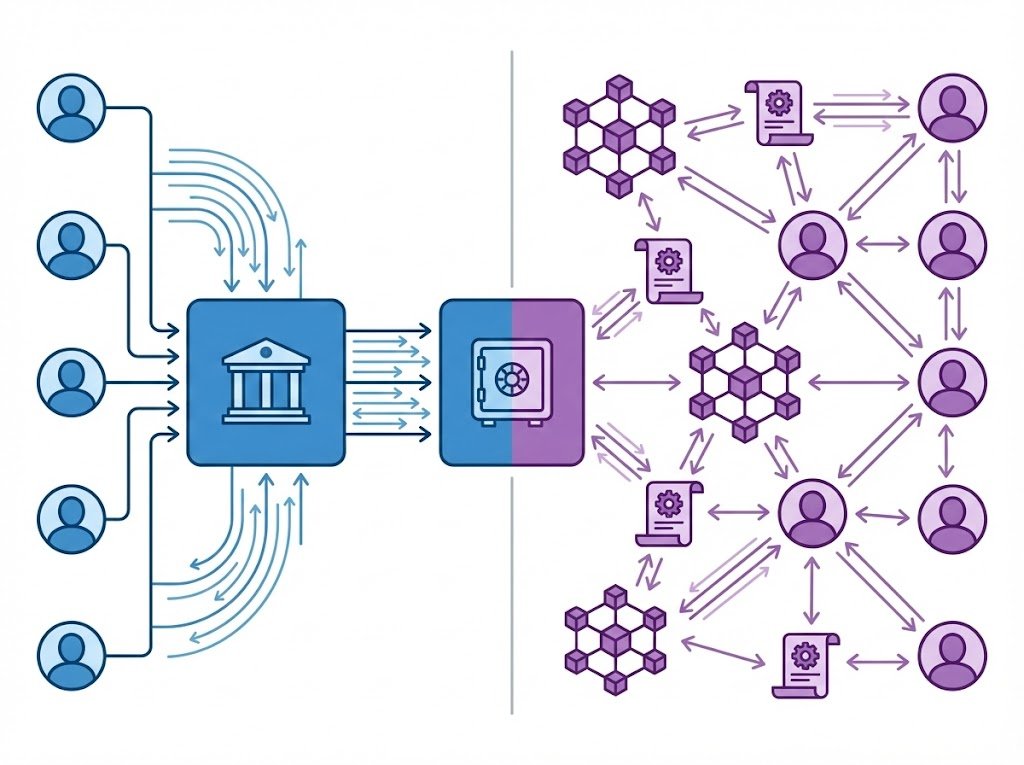
Both regulated and crypto-based platforms use binary outcome contracts, but the mechanics differ significantly.
Kalshi (Regulated Model)
Deposit via bank transfer (free), debit card (2% fee), or wire
Continuous order book matching buyers and sellers
Fees: roughly 1-3.5% depending on probability
Full KYC verification required
Position limits: $25K standard, $100M for election markets
Settlement through CFTC-registered clearinghouse
Polymarket (Crypto Model)
Deposit USDC to self-custodial wallet
Peer-to-peer trading, no central matching
Fees: currently 0% (will increase to 0.01-0.04%)
Minimal KYC historically (changing for US)
No formal position limits
Smart contract settlement via UMA Oracle
The self-custody distinction matters. Kalshi holds your funds centrally - if they fail, you're a creditor. Polymarket never touches your money - you control your keys - but you're exposed to smart contract bugs and oracle manipulation. A March 2025 oracle exploit cost Polymarket users $7 million.
What This Means for Players
If you're used to traditional sportsbooks, prediction markets offer genuine advantages:
No house edge. You're trading against other users, not against a bookmaker maintaining margin. Prices reflect collective wisdom, not calculated profit extraction.
Exit anytime. Locked into a bad futures bet at a sportsbook? Too bad. On a prediction market, sell your position whenever you want. Markets stay liquid.
Nationwide access. Live in Texas or California? You can't legally use DraftKings Sportsbook. You can use Kalshi.
Lower age requirement. Most prediction markets require 18+, not 21+.
The downsides are real too. Liquidity can be thin on obscure markets. The trading interface intimidates casual users. And responsible gaming protections are minimal compared to licensed sportsbooks - no deposit limits, no self-exclusion programs, no state-mandated problem gambling resources.
Where This Goes Next
The legal battles aren't over. Third Circuit and Fourth Circuit appeals will determine whether CFTC regulation truly preempts state authority. If courts rule against Kalshi, prediction markets would need state-by-state licensing - eliminating their core advantage.
But the trajectory favors expansion. CFTC leadership under the Trump administration supports prediction markets. Acting Chair Caroline Pham dissented from the original Kalshi prohibition. Nominated permanent chair Brian Quintenz sits on Kalshi's board (creating obvious conflicts he'll need to recuse from).
Traditional operators are committed. DraftKings, FanDuel, and Fanatics aren't experimenting - they're restructuring their entire regulatory strategies around prediction markets. When industry leaders surrender Nevada licenses to chase a new product category, that's not a test balloon. That's a bet.
For regular bettors, 2026 will bring more platforms, more markets, and - eventually - clearer rules. Whether prediction markets deliver on their promise of better odds and broader access depends on how the legal fights resolve. But the industry isn't waiting for permission. It's already here.