Flutter Pays $1.755 Billion for Full FanDuel Control
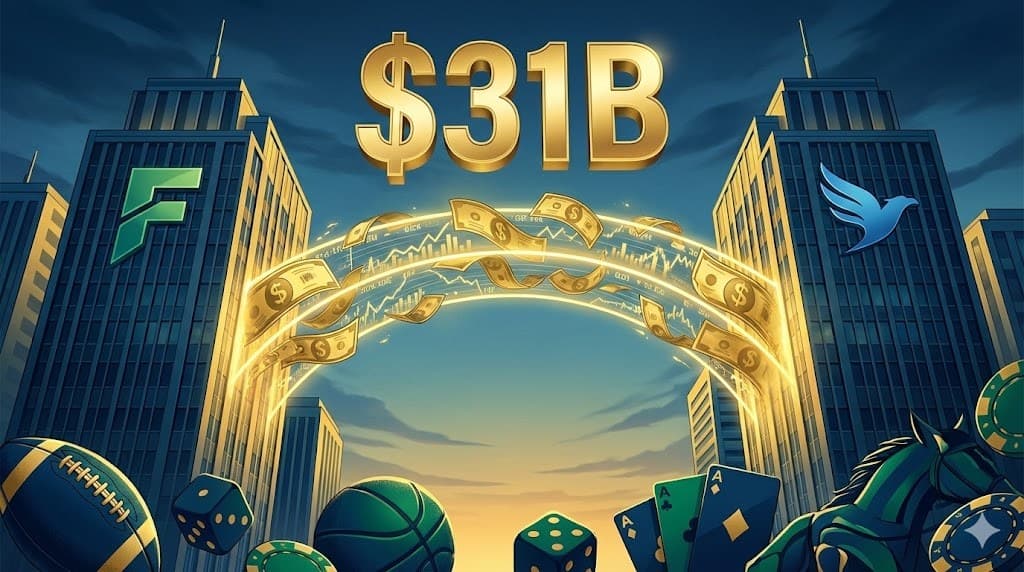
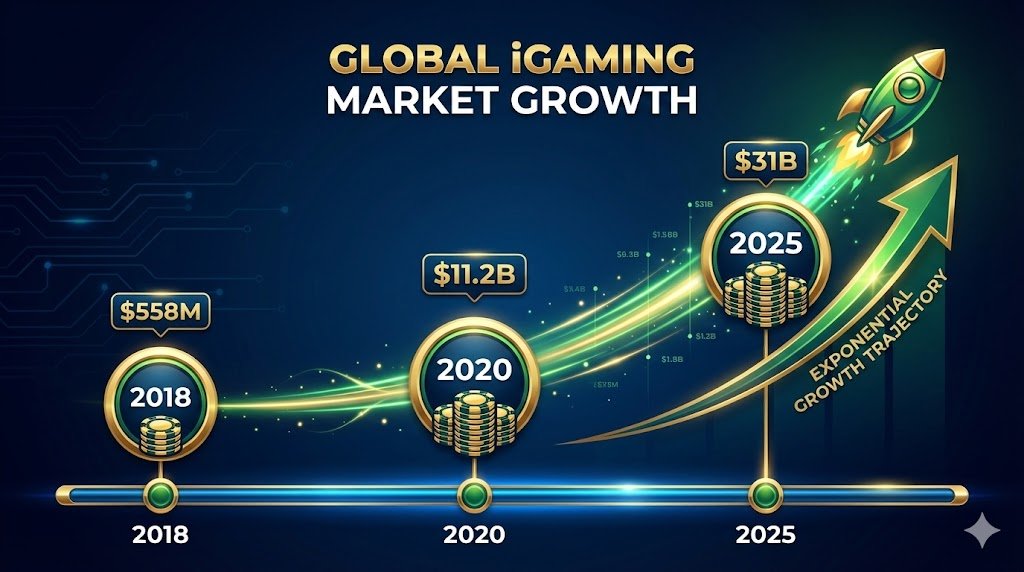
Flutter Entertainment just closed one of the most significant deals in U.S. gambling history. On July 31, 2025, the Irish betting giant completed its $1.755 billion acquisition of Boyd Gaming's remaining 5% stake in FanDuel - America's dominant sportsbook. The transaction values FanDuel at approximately $31 billion and marks the end of a seven-year ownership journey that turned a $158 million investment into a business worth 55 times more.
But here's what makes this story genuinely remarkable: Boyd Gaming originally received its 5% stake for just $10 million in 2018. That's a 175x return. In gambling terms, that's hitting a parlay that nobody would have taken.
The Deal Structure Explained
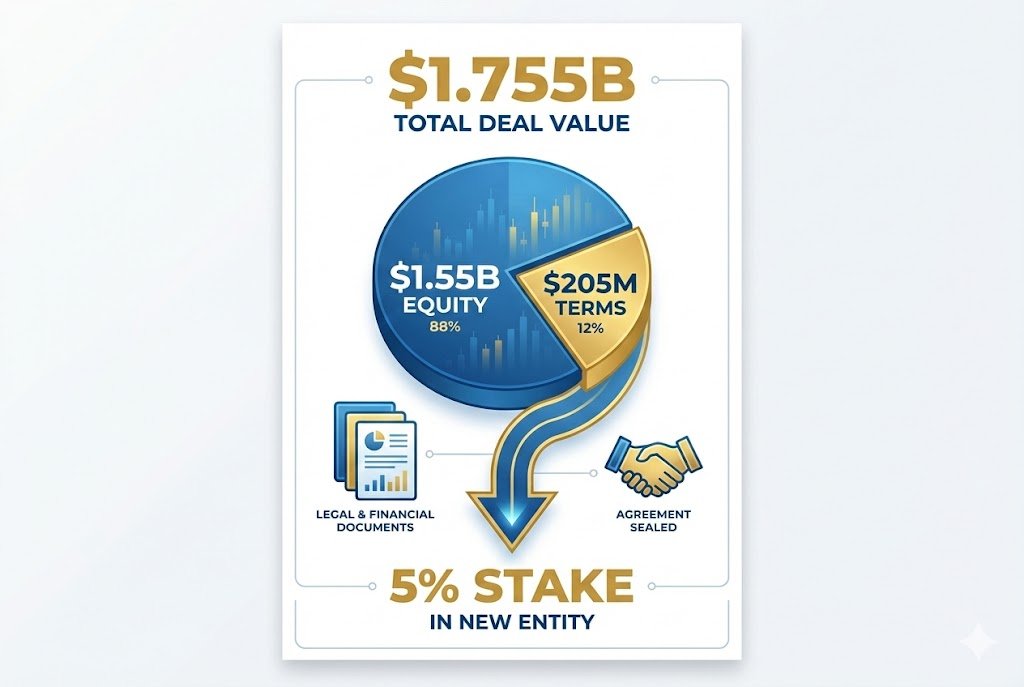
Flutter didn't just write a $1.755 billion check for 5% equity. The transaction was more sophisticated than that.
Of the total consideration, $1.55 billion represented the actual equity purchase - this is the number that generates the ~$31 billion valuation. The remaining $205 million bought revised commercial terms with Boyd, including reduced market access fees and the transfer of Boyd's retail sportsbook operations starting mid-2026.
To finance the all-cash deal, Flutter initially secured a $1.75 billion bridge credit facility, later replaced with permanent financing through senior secured notes totaling $1.272 billion across dollar, euro, and sterling tranches.
The partnership doesn't end completely. Boyd retains market access agreements with FanDuel through 2038 covering Iowa, Indiana, Kansas, Louisiana, and Pennsylvania - states where Boyd's land-based casino licenses enable FanDuel's online operations. The revised fee structure switches from revenue-sharing to fixed payments, creating $65 million in annual savings for Flutter.
From $558 Million to $31 Billion in Seven Years
Flutter's FanDuel journey began in May 2018, just days after the Supreme Court struck down PASPA (the federal sports betting ban). Paddy Power Betfair (as Flutter was then known) acquired a 61% controlling stake for $158 million cash plus its existing U.S. assets. That deal valued the entire company at approximately $558 million.
The second major milestone came in December 2020 when Flutter purchased the remaining 37.2% stake from Fastball Holdings for $4.175 billion, implying an $11.2 billion enterprise valuation. Boyd Gaming retained its 5% throughout.
With the July 2025 purchase, Flutter's total investment in FanDuel reaches approximately $6 billion for a business now valued at $31 billion - a fivefold return at the enterprise level.
The valuation trajectory tracks almost perfectly with U.S. sports betting's explosive growth from a handful of states to 38 jurisdictions plus Washington D.C. and Puerto Rico. FanDuel leveraged its existing 8 million daily fantasy sports users as a customer acquisition funnel, consistently converting them to sports bettors at lower cost than competitors building from scratch.
FanDuel's Market Dominance
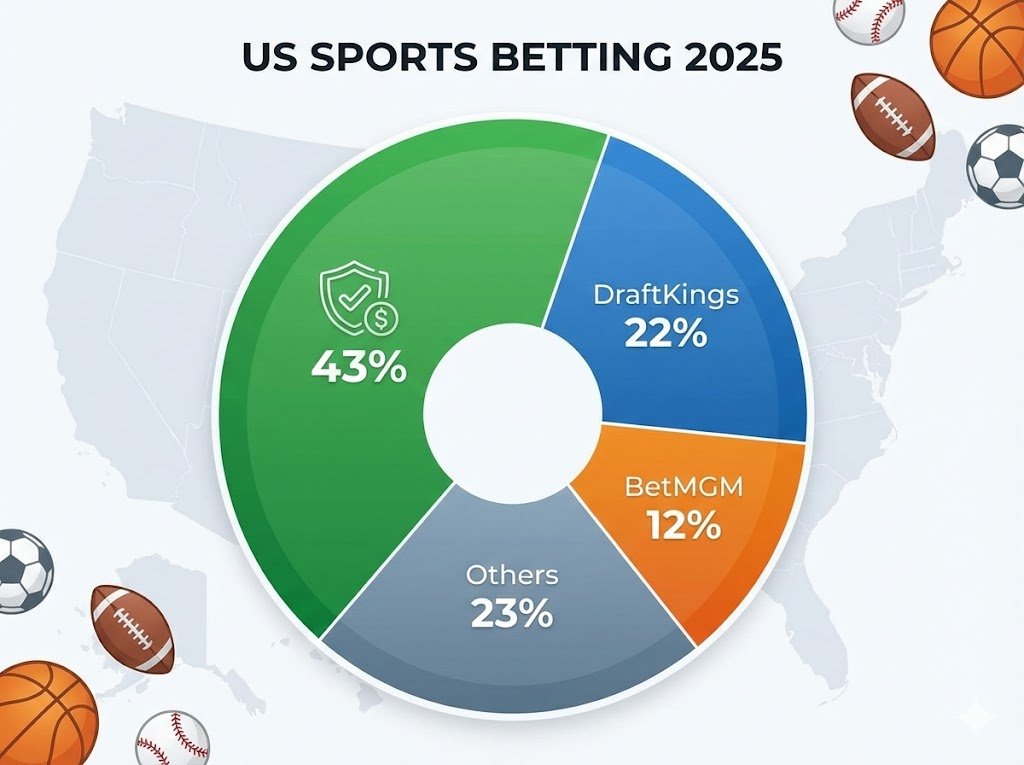
Independent data confirms FanDuel's commanding position. The operator holds 43% of U.S. sports betting gross gaming revenue (GGR) - the money sportsbooks keep after paying winners. In iGaming, FanDuel claimed the #1 position in Q2 2024, overtaking DraftKings, and has extended its lead to approximately 28-30% of GGR.
As of December 2025, FanDuel operates in 24 sports betting jurisdictions, most recently adding Missouri on December 1. The company generated $5.79 billion in revenue in 2024 and projects $7.47-$7.97 billion for 2025, with adjusted EBITDA expected to nearly triple from $507 million to $1.28-$1.52 billion.
The U.S. iGaming market remains limited - only seven states have legalized online casino gaming (New Jersey, Michigan, Pennsylvania, Connecticut, West Virginia, Delaware, and Rhode Island). But within that market, FanDuel has established clear leadership. For context on how different markets handle iGaming regulation, the U.S. approach varies dramatically by state.
Boyd Gaming's Spectacular Exit
For Boyd Gaming, this sale crystallizes what CEO Keith Smith called "nearly $2 billion in value for our shareholders, all from a $10 million investment. Pretty fair return I think."
The Las Vegas-based regional casino operator received its original 5% stake as part of the 2018 market access partnership - essentially a licensing arrangement allowing FanDuel to piggyback on Boyd's gaming permits in multiple states.
Boyd immediately deployed the after-tax proceeds (approximately $1.4 billion) to transform its balance sheet. Total debt dropped from $3.5 billion to $1.9 billion, reducing leverage from 2.8x to 1.5x EBITDA. The company will launch its own "Boyd Sports" retail sportsbook brand starting mid-2026 when it assumes control of its properties' sports betting from FanDuel.
What This Means for the Industry
The $31 billion valuation immediately made competitor DraftKings look undervalued. Mizuho maintained its Outperform rating on DraftKings with a $58 price target, arguing that the FanDuel valuation implied ~30% upside potential for DraftKings shares then trading around $22 billion market cap.
But there's a complication. Fox Corporation retains an option to acquire 18.6% of FanDuel by December 3, 2030. The option allows Fox to purchase the stake at a price based on FanDuel's December 2020 valuation ($20 billion) plus a 5% annual escalator - currently approximately $4.5 billion. With FanDuel now valued at $31 billion, that option is dramatically in-the-money.
Fox CEO Lachlan Murdoch has publicly stated the company has begun the gaming licensing process, calling Fox "tremendous believers in sports betting." If Fox exercises and becomes licensed, Flutter's ownership would drop to approximately 81.4%.
The Bigger Picture: U.S. Gambling's Record Growth
The U.S. sports betting industry generated a record $13.71 billion in gross gaming revenue on $147.9 billion in handle during 2024 - the fourth consecutive record-breaking year. Industry projections suggest continued growth to approximately $18.5 billion in 2025 revenue.
The duopoly structure has solidified. FanDuel and DraftKings together command approximately 65% of the market, with the remaining share fragmented among BetMGM (~12%), Fanatics (~7%), Caesars (~5-6%), and smaller operators.
Yet substantial growth runway remains. California and Texas - the two largest states by population - have not legalized sports betting. Online casino gaming remains restricted despite generating $8.41 billion in 2024 revenue (with the U.S. now the world's largest regulated iGaming market, surpassing the U.K.).
The regulatory environment presents challenges. State taxes continue rising, with Illinois passing a significant operator tax increase in 2025. The UK's approach to gambling taxation offers a glimpse of where U.S. states might head. New York's 51% GGR tax remains the industry's most punitive.
What Players Should Know
For bettors using FanDuel, the ownership change means... basically nothing immediate. FanDuel will continue operating under the same brand with the same products. If anything, Flutter's full control could accelerate product improvements since there's no longer any need to coordinate with minority stakeholders on strategic decisions.
The more interesting question is whether the Fox option gets exercised. A media company with significant sports rights (Fox Sports) taking an 18.6% stake in the leading sportsbook could create interesting synergies - or regulatory complications.
For players interested in regulated online casinos and sportsbooks, the consolidation trend signals that the era of operator proliferation has ended. Approximately a dozen brands reduced footprint or exited entirely in 2024. The market increasingly rewards scale, operational efficiency, and technological sophistication.
The Bottom Line
Flutter's $1.755 billion transaction represents more than ownership consolidation. It validates their 2018 thesis that daily fantasy sports customer bases would convert efficiently into sports bettors, crystallizes nearly $25 billion in value creation over seven years, and establishes valuation benchmarks that immediately rippled through competitor stock prices.
What began as Flutter's opportunistic $158 million bet on a fantasy sports company has become a $31 billion strategic asset at the center of American sports culture. Boyd Gaming turned $10 million into $1.755 billion. And Fox waits in the wings with an option that could reshape the ownership structure again before the decade ends.
The U.S. gambling market has matured faster than anyone predicted in those early post-PASPA days of 2018. The transformation is far from complete - but the major players are now firmly established.