New Zealand Opens Online Casino Market

New Zealand is about to flip the switch on legal online casinos. By December 2026, up to 15 licensed operators will be competing for Kiwi players – a market where NZ$500-900 million currently flows to offshore sites with zero oversight.
The Online Casino Gambling Bill passed its first Parliament reading in July 2025 with overwhelming support (83-39 votes). Internal Affairs Minister Brooke van Velden didn't mince words about the goal: channel players away from thousands of unregulated offshore casinos toward a handful of licensed operators with actual consumer protections.
But here's what makes New Zealand's approach genuinely different from recent market launches in Ontario or Brazil: extreme scarcity. Just 15 licenses. Allocated by competitive auction. Non-transferable. And no operator can control more than three.
How the 15-License System Works
The allocation unfolds in three stages. First, operators submit expressions of interest detailing ownership structures, compliance histories, and tech platforms. Successful candidates then compete in an auction – a genuinely novel mechanism that lets market forces determine both who enters and what they pay. Winners complete full applications covering advertising strategies, harm prevention protocols, and New Zealand-specific business plans.
Why only 15? Government analysis found the top 15 operators already capture over 90% of GST revenue from New Zealand's grey market. Officials concluded high channelization rates can be achieved without dozens of competitors, while limiting licenses reduces regulatory costs and ensures only well-capitalized operators participate.
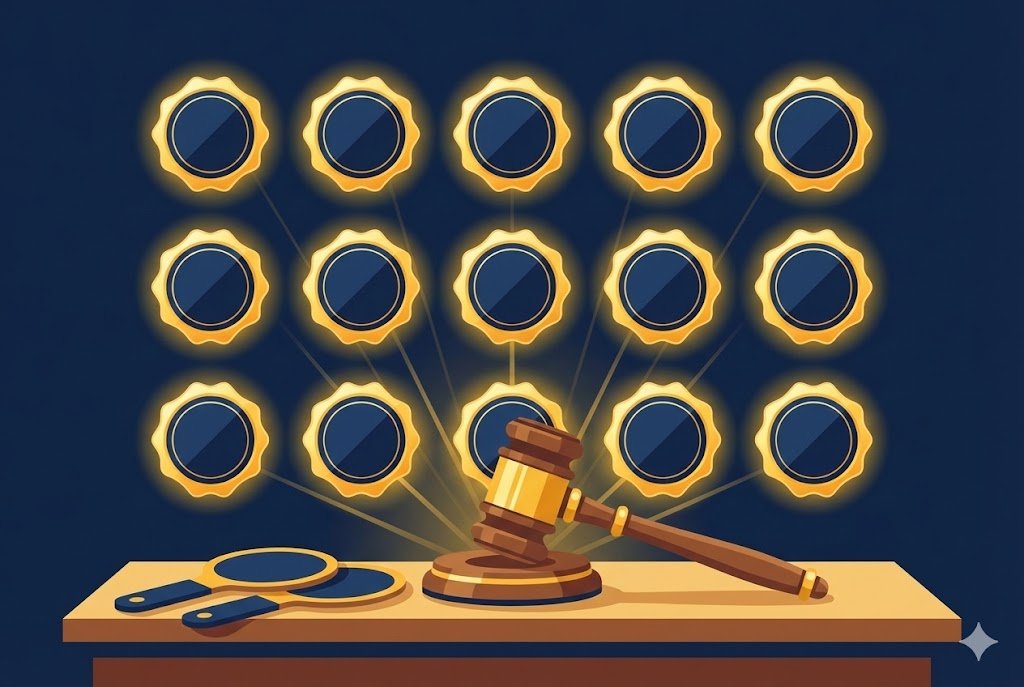
Each license ties to a single platform or brand, valid for three years with one five-year renewal option. Platforms must operate at least 270 days annually with quarterly reporting. Miss those targets, and the license can be suspended or revoked.
Tax Structure: Competitive but Not Cheap
The tax framework underwent significant revision during public consultation. The offshore gambling duty increased from the originally proposed 12% to 16% of gross gaming revenue – with that extra 4% ringfenced for community funding administered by the Lottery Grants Board.
Here's the full breakdown:
16% offshore gambling duty on GGR
15% GST on gambling services
1.24% Problem Gambling Levy
Cost recovery fees set by the regulator

Total effective burden: roughly 32% of GGR before corporate taxes. That's more competitive than Brazil's crushing 50%+ rate that's driving operators away, but higher than Ontario's 22.5% pure GGR tax. For context, operators in the Netherlands now face 37.8% – and that market is hemorrhaging players to illegal sites.
Player Protections: Strong Framework, Notable Gaps
Age verification kicks in at 18 – actually two years younger than New Zealand's 20-year threshold for land-based casinos. Players must set time, spending, and deposit limits during account creation. But here's the catch: they can opt out entirely. These are voluntary tools, not mandatory caps.
Self-exclusion operates at the individual operator level. There's no centralized national register like the UK's GAMSTOP system that blocks access across all licensed sites simultaneously. Problem gambling advocates pushed hard for this, but regulators prioritized a lighter-touch approach.
The payment policy stands out internationally for its permissiveness. Unlike the UK, which banned credit card gambling in 2020, New Zealand will permit cryptocurrency, credit cards, and "Buy Now Pay Later" schemes for deposits. Players who prefer crypto casinos will find familiar payment options in the regulated market – a deliberate choice to compete with offshore sites on convenience.
For comparison, the Unibet €4 million fine in the Netherlands showed what happens when operators fail on player protection in strictly regulated markets. New Zealand's framework aims to find a middle ground – robust requirements without the enforcement intensity that's driving operators out of markets like the Netherlands.
Advertising: Restricted but Permitted
Licensed operators can advertise – a major change from current law – but within heavily circumscribed boundaries.
TV, radio, and streaming ads face a 6:00am to 9:30pm watershed ban (stricter than the UK's 9pm cutoff). Each platform gets a maximum of five 30-second spots per 24-hour period. Outdoor advertising is prohibited within 300 meters of schools, sports fields, and other locations where minors gather. Transit advertising on buses and trains? Completely banned.
The most significant restriction: New Zealand bans paid endorsements from celebrities, athletes, and social media influencers outright. All sponsorships are prohibited too. Practice or demo games – common acquisition tools for online casinos – are similarly forbidden.
Sports Betting: One Operator, Period
Here's where New Zealand diverges sharply from most regulated markets. The Online Casino Gambling Bill operates alongside – not in replacement of – an existing sports betting monopoly.
TAB NZ holds exclusive legal rights to offer sports and racing betting, both online and retail. This monopoly is backed by a 25-year strategic partnership with Entain (owners of Ladbrokes, Coral, and bwin). The contract guarantees Entain NZ$150 million annually for the first five years plus a 50/50 profit split thereafter.
For international sportsbook operators, this definitively closes the New Zealand market. bet365, Betfair, Stake, and similar operators are now explicitly prohibited from accepting sports or racing wagers from New Zealand residents. The door opened for casino games; it slammed shut for sports betting.
Which Operators Are Coming?
Government documents confirm formal expressions of interest from bet365, 888 Holdings, and Super Group (Betway) – all among the world's largest online gambling operators. They join 36 entities already registered to pay New Zealand GST on offshore gambling revenue, including Flutter Entertainment (world's largest gambling company) and Entain.
Minister van Velden stated directly: "We don't have a huge online gambling market, so I would expect that it's mainly offshore providers." Domestic operators SkyCity (five land-based casinos), TAB NZ, and smaller regional casinos have also signaled intentions to apply.
International applicants face no local presence requirements – the government rejected lobbying for domestic-entity restrictions as violating free trade agreements. What matters: robust verification systems, comprehensive harm minimization strategies, clean compliance histories, and detailed New Zealand market plans.
How This Compares to Ontario and Brazil
Ontario took the opposite approach when iGaming launched in April 2022. Any operator meeting standards gets a license – resulting in 48-50 operators running 82-88 gaming websites by late 2025. The market achieved an impressive 83.7% channelization rate with CAD$3.2 billion in GGR during fiscal 2024-25. The downside? Advertising saturation and ongoing debates about whether too many operators dilute player protections.
Brazil launched in January 2025 with federal licensing but punishing taxation. The effective burden exceeds 50% of gross revenue. Despite licensing 68+ operators, Brazil's black market remains dominant – illegal operators handle approximately R$6.5-7 billion monthly versus R$3.1 billion for the regulated market.
New Zealand deliberately chose neither path. The 15-license limit avoids Ontario's proliferation while moderate 32% taxation prevents Brazil's viability crisis. The auction mechanism ensures committed, well-resourced operators compete rather than anyone who meets minimum standards.
Timeline: When Does This Actually Happen?
Milestone | Date |
Bill enacted | Early 2026 |
Expression of interest period | March-April 2026 |
Competitive license auction | June 2026 |
Unlicensed operators prohibited | July 1, 2026 |
First licenses issued | December 1, 2026 |
16% duty rate takes effect | January 1, 2027 |
Operators currently serving New Zealand can continue without advertising until their application is determined or December 31, 2026 – provided they apply before July 1, 2026.
The Bottom Line
New Zealand isn't really "opening" its market. It's constructing a controlled enclosure with extremely limited entry. For the handful of operators who secure one of 15 licenses, that exclusivity could prove highly valuable – a developed, English-speaking economy with high revenue-per-user and legal advertising permission.
For players, the shift means access to licensed platforms with actual consumer protections, dispute resolution mechanisms, and responsible gambling tools. Whether 15 operators provide enough choice to match what top rated casinos offer in more open markets remains the central question.
For everyone not holding a license by December 2026? The door stays firmly closed.