Spain Just Fined 32 Gambling Operators €33.5 Million in a Single Day
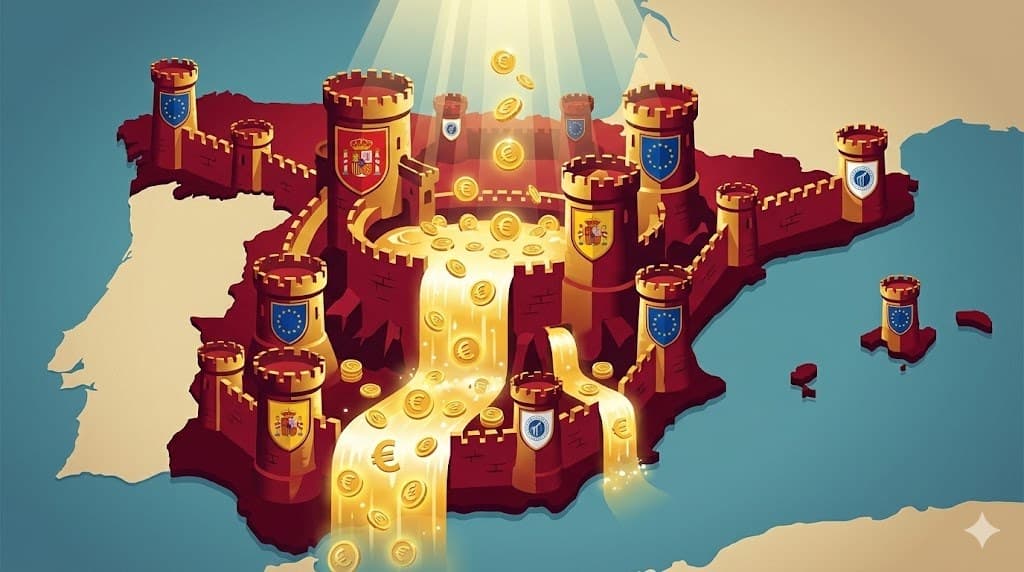
Spain's gambling regulator dropped a €33.5 million hammer on November 25, 2025. Thirty-two operators - from offshore wildcats to licensed giants like Entain and Flutter - received sanctions in what's become routine for Europe's most aggressive enforcement body. The DGOJ (Dirección General de Ordenación del Juego) has now issued €496 million in fines since 2021. That's more than every other major European regulator combined.
What makes Spain different? And what does this mean if you're gambling online from - or thinking about entering - the Spanish market?
The November crackdown hit everyone
The enforcement action split into two categories. Six unlicensed offshore operators - XYZ Entertainment, Moonrail Limited, EOD Code SRL, Samaki, Lone Rock Holdings, and Novaforge - each received the maximum €5 million penalty plus two-year domain blocks. Standard procedure for operators caught targeting Spanish players without a license.
But the interesting part is what happened to licensed operators.
Electraworks Ceuta, an Entain subsidiary running Bwin in Spain, got hit with €512,000 for three violations: allowing self-excluded players to gamble, running uncertified technical systems, and failing platform software requirements. 888 Online paid €250,000 for technical non-compliance. Betfair (owned by Flutter) received €100,000 for responsible gambling failures.
Even Codere, Spain's homegrown gambling champion, faced a €17,500 fine. Nobody's immune.
Spain fines more than everyone else - by a lot

Here's the comparison that matters:
Regulator | 2024 Fines |
|---|---|
Spain (DGOJ) | €142.7 million |
Netherlands (KSA) | ~€24 million |
UK (UKGC) | ~€7.7 million |
Malta (MGA) | ~€0.55 million |
Spain issued 18 times more in penalties than the UK Gambling Commission last year. The gap isn't a rounding error - it's a fundamentally different approach to regulation.
The DGOJ applies a standardized €5 million fine to every unlicensed operator caught targeting Spanish consumers. No negotiations, no warnings, no second chances. The UK mostly sends cease-and-desist letters. Malta caps unlicensed operator fines at €500,000. Spain just bills them and blocks their domains.
Since July 2021, DGOJ has publicly disclosed 212 sanctions - roughly one every eight days for four years straight. This isn't occasional enforcement. It's a machine.

The 2021 reforms created Europe's strictest gambling rules
Spain's current posture traces back to Royal Decree 958/2020, implemented through 2021. The advertising restrictions alone would make most marketing teams weep:
What's banned: TV and radio gambling ads outside 1-5 AM. Sports team sponsorships, jersey logos, stadium naming rights. Welcome bonuses aimed at new customers. Social media ads to non-registered users. Any imagery suggesting gambling improves your social status or lifestyle.
Spain's Supreme Court rolled back some provisions in April 2024 - celebrity endorsements are allowed again, and video platform restrictions were loosened. But the sports sponsorship ban remains fully in force. La Liga teams can't wear betting logos. That's not changing.
The reforms also mandated public disclosure of all serious sanctions. Every fine gets published on DGOJ's website. For operators, that creates reputational pressure beyond the financial hit - your compliance failures become permanent public record.
The self-exclusion system is why Entain got fined €512,000
Spain's RGIAJ (Registro General de Interdicciones de Acceso al Juego) is a national self-exclusion registry. Players can ban themselves for one month, three months, six months, or permanently. Operators must check every player against this database in real-time during registration.
Electraworks Ceuta's largest violation was "allowing access to gambling by prohibited individuals" - meaning self-excluded players got through. That's not a technicality. It's a core responsible gambling failure that Spanish regulators take extremely seriously.
Over 56,000 people are registered in RGIAJ. Operators face multiple obligations: real-time verification integration, mandatory blocking, prevention of prize collection by excluded players, and prominent links to RGIAJ registration on their platforms.
The gap? RGIAJ only covers federally-licensed online gambling. Land-based casinos fall under regional jurisdiction, and most regions don't interconnect with the national system. A player self-excluded online can still walk into a physical casino in Madrid.
Domain blocking works - but not completely
Spain deploys DNS blocking and payment blocking against unlicensed operators. Every €5 million fine comes with a two-year domain block and market exclusion. DGOJ reported closing 180 unauthorized websites in 2020 alone.
But here's the uncomfortable data: a November 2025 study by EY found that 23.4% of Spanish players have used unlicensed gambling sites at least once. The illegal market generates an estimated €231 million annually - about 16% of legal market value.
Nearly half of players who thought they were gambling on legal sites had actually used unlicensed platforms. Social media drives discovery: 38% of illegal gambling use traces to YouTube, TikTok, and Instagram, with another 12% via Telegram.
Spain's response? Making VPN use to access unlicensed gambling a minor felony punishable by up to €100,000. That's targeting end users, not just operators - an unusually aggressive measure that most jurisdictions wouldn't attempt.
Why operators stay despite the fines
No major licensed operator has exited Spain despite €496 million in cumulative enforcement. The math explains why.
Spain's licensed gambling sector posted record gross gaming revenue of €1.45 billion in 2024 - up 17.6% year-over-year, significantly outpacing the 5% European average. Active players increased 21.7% to 1.9 million. Online casino drives half the revenue at €730.7 million, with sports betting contributing €608.9 million.
Entain just became the NFL's official Spanish betting partner through Bwin. That's a major investment made after receiving a €512,000 fine. The message is clear: periodic penalties are a cost of doing business in a market growing faster than almost anywhere else in Europe.
Industry associations complain loudly. Jdigital argues advertising restrictions "contribute to the growth of an unsupervised black market." The European Gaming and Betting Association warns that "well-meaning consumer protection measures" risk "pushing online players towards unregulated, offshore markets."
But operators keep absorbing fines rather than leaving. A €500,000 penalty hurts less than abandoning a €1.45 billion market.
What this means for players
If you're gambling from Spain, DGOJ's aggressive enforcement creates real protections. The RGIAJ self-exclusion system works for responsible gambling purposes. Advertising restrictions mean fewer promotional bombardments. Licensed operators face genuine consequences for compliance failures.

The trade-off: a 16% illegal market share shows that enforcement alone doesn't eliminate offshore access. Young adults aged 18-24 show the highest illegal platform usage at 16.1%. And nearly a third of Spanish players can't reliably distinguish legal from illegal platforms.
New protections under Royal Decree 176/2023 include cross-operator deposit limits of €600 per day and €1,500 per week, enhanced monitoring for players under 25, and mandatory warning labels. These address problem gambling at the licensed market level but do nothing for players who specifically seek offshore sites to escape restrictions.
The bottom line
Spain has built Europe's most aggressive gambling enforcement machine. €496 million in fines since 2021. 212 public sanctions. Standardized €5 million penalties for unlicensed operators. Technical compliance requirements that catch even major operators in violations.
The model shows both what's possible and what's not. Licensed market revenue keeps growing. Major operators stay committed. Self-exclusion infrastructure provides meaningful tools for problem gamblers. But a persistent illegal market demonstrates that even aggressive enforcement can't fully channel gambling activity toward licensed operators.
For players choosing where to gamble, Spain-licensed operators offer genuine regulatory protection - the fines prove regulators actually enforce the rules. For operators considering market entry, the message from Madrid is unambiguous: comply fully or pay heavily. DGOJ under Minister Pablo Bustinduy has shown no signs of moderating its approach.
If you're looking for top rated casinos with strong regulatory credentials, Spanish-licensed operators now carry some of the most meaningful compliance validation in Europe. Getting fined by DGOJ isn't fun - but surviving their scrutiny means something.
Word count: ~1,380 words
Sources used: GamblingNews, iGaming Business, Next.io, SBC News, CasinoBeats, El Español, EY/Jdigital study, ICLG Spain Gambling Report 2025, Chambers Gaming Law Guide, World Casino Directory