UK Crypto Casinos Could Launch in 2026
The UK Gambling Commission just admitted what the industry has known for years: banning crypto doesn't stop players from using it. It just pushes them somewhere regulators can't reach.
UKGC CEO Andrew Rhodes dropped this reality check at the IAGR 2025 Conference in Toronto. What was once dismissed as a distant concern is now, in his words, an "18-month to two-year challenge." Translation: the government needs to decide on crypto gambling policy by late 2026, or risk losing an entire generation of players to offshore casinos with zero consumer protections.
No official legalization timeline exists yet. But the signals are clear enough that UK operators and players should start paying attention.
The Numbers That Changed Everything
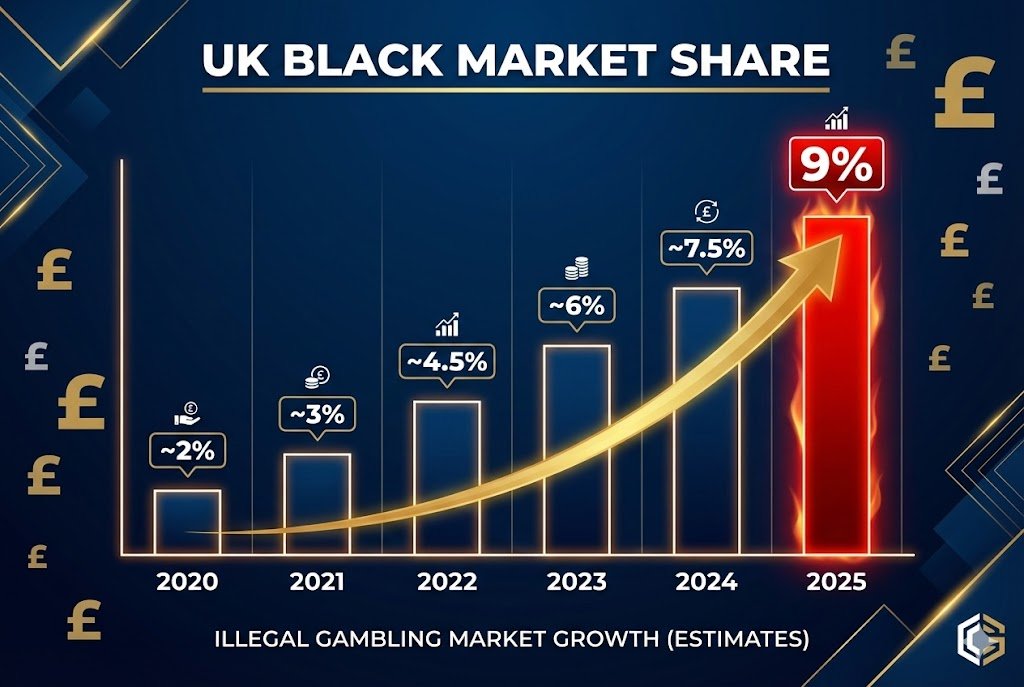
The UK's black market for online gambling has exploded. Depending on which study you trust, unlicensed operators now capture between 5% and 9% of all online gambling activity - up from barely 2% in 2020.
Put differently: somewhere between £379 million and £4.3 billion flows through sites that don't answer to UK regulators, don't participate in GamStop self-exclusion, and don't follow responsible gambling requirements.
The Betting and Gaming Council's research with PwC found 1.5 million Brits betting on the black market. The UKGC's own data shows 2.5% of adults - roughly 1.3 million people - used an unlicensed operator in the past year. And here's the kicker: 9% of online gamblers have already deposited crypto to gamble. Every single one of them did it at an offshore site, because no UK-licensed casino accepts cryptocurrency.
Young players drive this shift. Among 18-24 year olds who bet online, 21% already use unregulated platforms. These aren't casual gamblers stumbling onto dodgy sites - they're actively seeking features the regulated market can't offer.
Why Players Leave for Offshore Crypto Sites
The migration isn't random. Players cite specific reasons for choosing crypto casinos over UK-licensed alternatives.
Speed tops the list. Crypto withdrawals typically process in 5-30 minutes. UK-licensed sites? Three to five days is standard, and that's if nothing triggers a compliance review. For players used to instant everything, waiting nearly a week to access winnings feels archaic.
Then there's the feature gap. UKGC regulations banned auto-spin, turbo mode, and bonus buys - the exact content that dominates gambling streams and social media. One content creator quoted in industry research put it bluntly: regulated UK sites make it impossible to produce the content viewers want to watch.
The affordability checks don't help either. Players who've had accounts frozen or withdrawals delayed while operators verify source of funds have strong incentives to try platforms that don't ask questions. Crypto-interested gamblers are twice as likely to have faced these friction points with traditional payment methods.
April 2026: The Tax Increase That Could Break the Market
Whatever momentum exists toward crypto regulation, the upcoming tax hike will accelerate it.
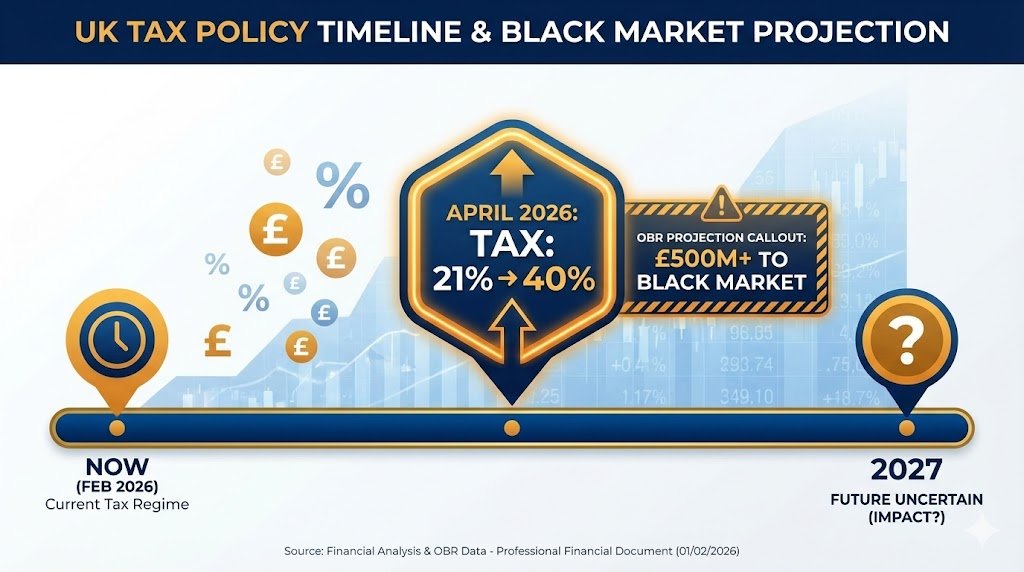
From April 2026, Remote Gaming Duty jumps from 21% to 40%. General Betting Duty for online operators rises from 15% to 25%. The Office for Budget Responsibility - not industry lobbyists, but the government's own forecaster - predicts this will push £500 million in additional wagers to unlicensed operators.
Industry projections are grimmer. Analysis from EY commissioned by the Betting and Gaming Council estimates £8.4 billion shifting to the black market, with 40,000 jobs at risk. Even if you discount those figures as self-interested, the direction is unmistakable.
We covered the UK's 40% gambling tax extensively when it was announced. The crypto question adds another dimension: if licensed operators become significantly less competitive on both features and effective odds, where exactly do regulators expect tech-savvy players to go?
What the Regulator Actually Said
Rhodes didn't announce imminent legalization. But his framing matters.
"The reality is, in some years to come there will probably be a significant cohort of consumers who use cryptocurrencies because that is what they're accustomed to," he told the industry briefing. "It is a demographic shift that will find they have no place in the legitimate industry because of the currency they use."
He acknowledged crypto gambling is already "widespread" in the illegal market, "especially among under-40s." And he confirmed what everyone suspected: this will require "a government-level discussion" because "once you open that door, you cannot close it."
The UKGC plans to analyze VPN download trends to quantify how many UK players access illegal overseas sites. That data, combined with the post-tax-hike migration numbers, will likely shape the policy debate through 2026.
How Other Countries Handle Crypto Gambling
The UK wouldn't be pioneering here. Several jurisdictions already regulate crypto casinos, with varying approaches.
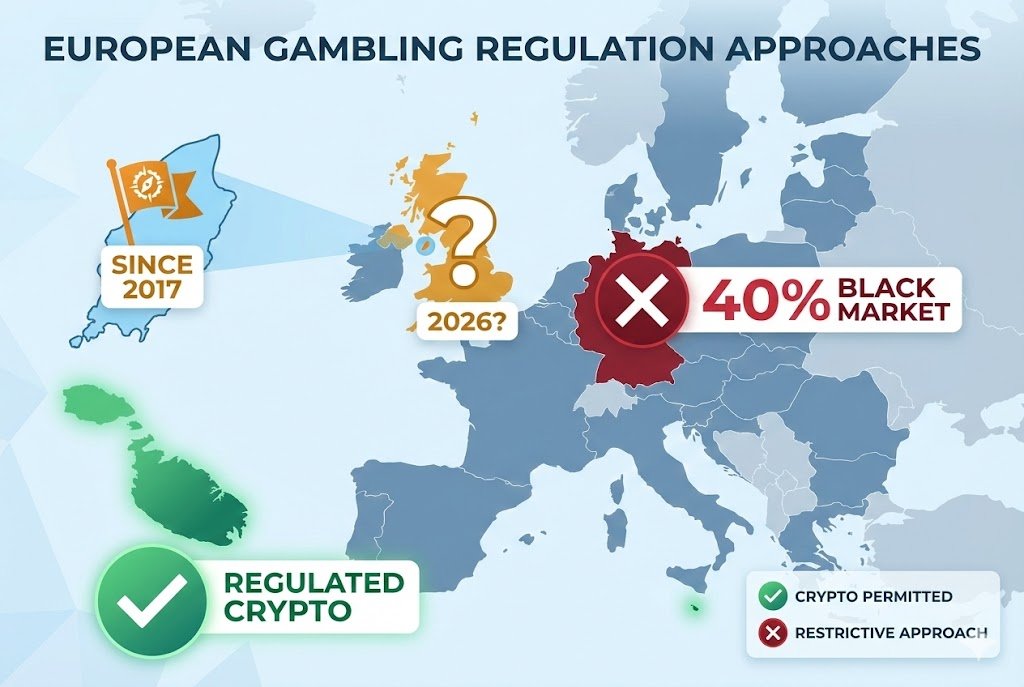
Malta offers the most sophisticated framework. The Malta Gaming Authority requires prior approval for crypto integration, bi-annual audits, prohibition of privacy coins like Monero, and deposit limits set in fiat terms to address volatility. It's restrictive but workable - and Malta remains a major hub for licensed operators.
Isle of Man was first, permitting digital currency gambling since January 2017. The jurisdiction offers specific blockchain software supplier licenses while maintaining its UKGC whitelist status. If crypto gambling were inherently incompatible with proper regulation, Isle of Man would have lost that status years ago.
Curaçao completed a major regulatory overhaul in 2024-2025. The new framework treats crypto as another payment method under standard licensing - no special crypto license required, but with enhanced AML/KYC requirements. Major operators like Stake run under this regime.
Then there are the cautionary tales. Germany's restrictive approach - €1 per spin limits, €1,000 monthly deposit caps - created a massive black market. Industry estimates suggest only 40% of online gambling revenue comes from licensed operators. The Netherlands raised gambling taxes to 34.2% while explicitly banning crypto; roughly half of money lost now flows to unlicensed sites despite 94% of players using licensed platforms at least some of the time.
The Consumer Protection Paradox
Critics raise legitimate concerns. Money laundering remains the primary worry - the UKGC classifies crypto as "high risk" for good reason. Anonymity features and source-of-funds verification challenges are real.
Research funded by GambleAware found over 70% of crypto casinos lack links to gambling support or age filtering software. Cryptocurrency volatility adds another risk layer that traditional currencies don't carry.
But here's the paradox: the current approach offers zero protection to the 1.3+ million UK players already using offshore sites. A regulated framework would bring these players under UK consumer protections, dispute resolution mechanisms, and responsible gambling requirements. Technical solutions exist - chain analytics tools can trace crypto provenance with precision rivaling traditional banking. Closed-loop withdrawal requirements could ensure returns go only to verified wallets.
The question isn't whether crypto gambling has risks. It does. The question is whether managed risks within a regulated system beat unmanaged risks in an offshore free-for-all.
What This Means If You're Choosing a Casino Now
For UK players currently using licensed sites, nothing changes immediately. No UK casino can legally accept crypto today, and that won't flip overnight even if policy shifts.
For players already using offshore crypto platforms, the regulatory landscape remains what it's been: technically legal for you (no UK law criminalizes using unlicensed sites), but with none of the protections licensed operators provide. No GamStop integration, no guaranteed dispute resolution, no certainty that your balance is actually there when you try to withdraw.
Players who prefer the security of licensed platforms can explore top rated casinos that meet UKGC requirements. Those prioritizing fast payout casinos within the regulated market can find options that process withdrawals faster than the industry average, even without crypto.
The 2026 timeline Rhodes outlined suggests any policy change would take 18-24 months to implement after a government decision. Realistically, UK-licensed crypto casinos - if they happen at all - are a 2027 or 2028 story.
The Bigger Regulatory Picture
The FCA's comprehensive cryptoasset regime is expected to come into force on October 25, 2027. That framework may provide the infrastructure gambling-specific crypto rules could build upon. Until financial services regulation catches up, the UKGC faces constraints on what it can unilaterally permit.
Meanwhile, the pressure builds. Every month of inaction means more players discovering offshore alternatives. Every GamStop registration that results in a player finding "Not on GamStop" options represents a failure of the current approach.
Rhodes called it a demographic shift the industry can't ignore. Whether the government agrees - and how quickly it moves - will shape UK gambling for the next decade.